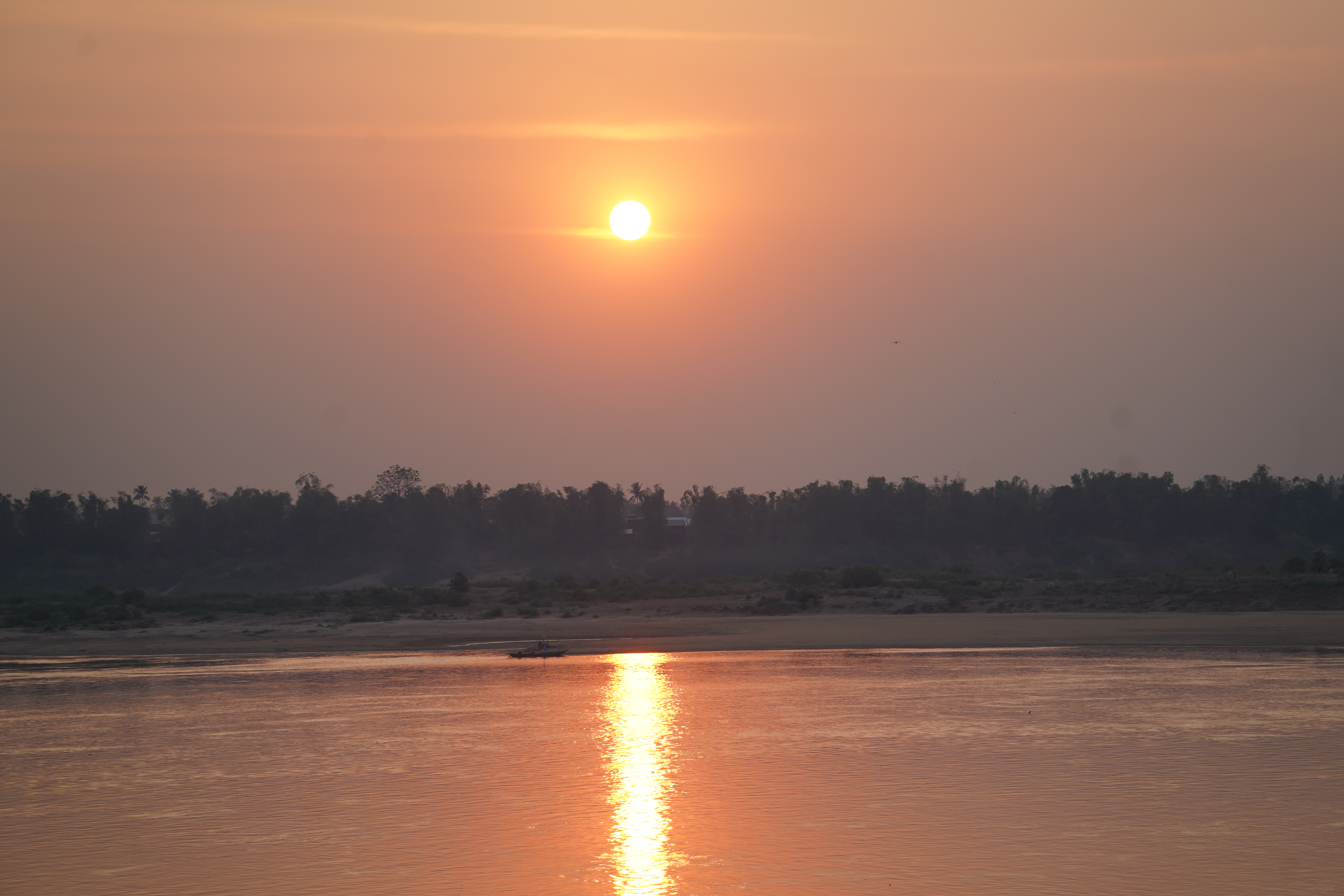
Sunset over the Mekong River — a waterway whose full value, spanning fisheries, sediment, flood control, culture, and biodiversity, has never been fully counted.
Natural Capital
What Rivers Are Worth
How much is a river worth? It is a question that sounds almost absurd — and yet it is one of the most important questions in environmental policy. Rivers provide food, water, flood protection, sediment, transportation, cultural identity, and biological diversity. They sustain billions of people and countless species. But because so many of these services are invisible to markets, they are routinely left out of the cost-benefit analyses that determine whether a dam gets built, a floodplain gets drained, or a sand mining operation gets licensed. The result is a systematic undervaluation of rivers that enables their destruction.
This research project, developed in collaboration with hydrologist Rafael Schmitt of the University of California Santa Barbara, takes on the challenge of quantifying river ecosystem services — the full range of benefits that healthy rivers provide to people and nature. The work focuses on the Mekong River in Southeast Asia, which may be the most productive river on Earth and one of the most complex to value. As explored in The Conversation, even a conservative thought experiment suggests the Mekong could be worth more than a trillion dollars — and yet that figure barely registers in the development decisions that continue to reshape the river.
A conservative thought experiment suggests the Mekong River could be worth more than a trillion dollars. Yet its value is barely considered in the decisions that reshape it.
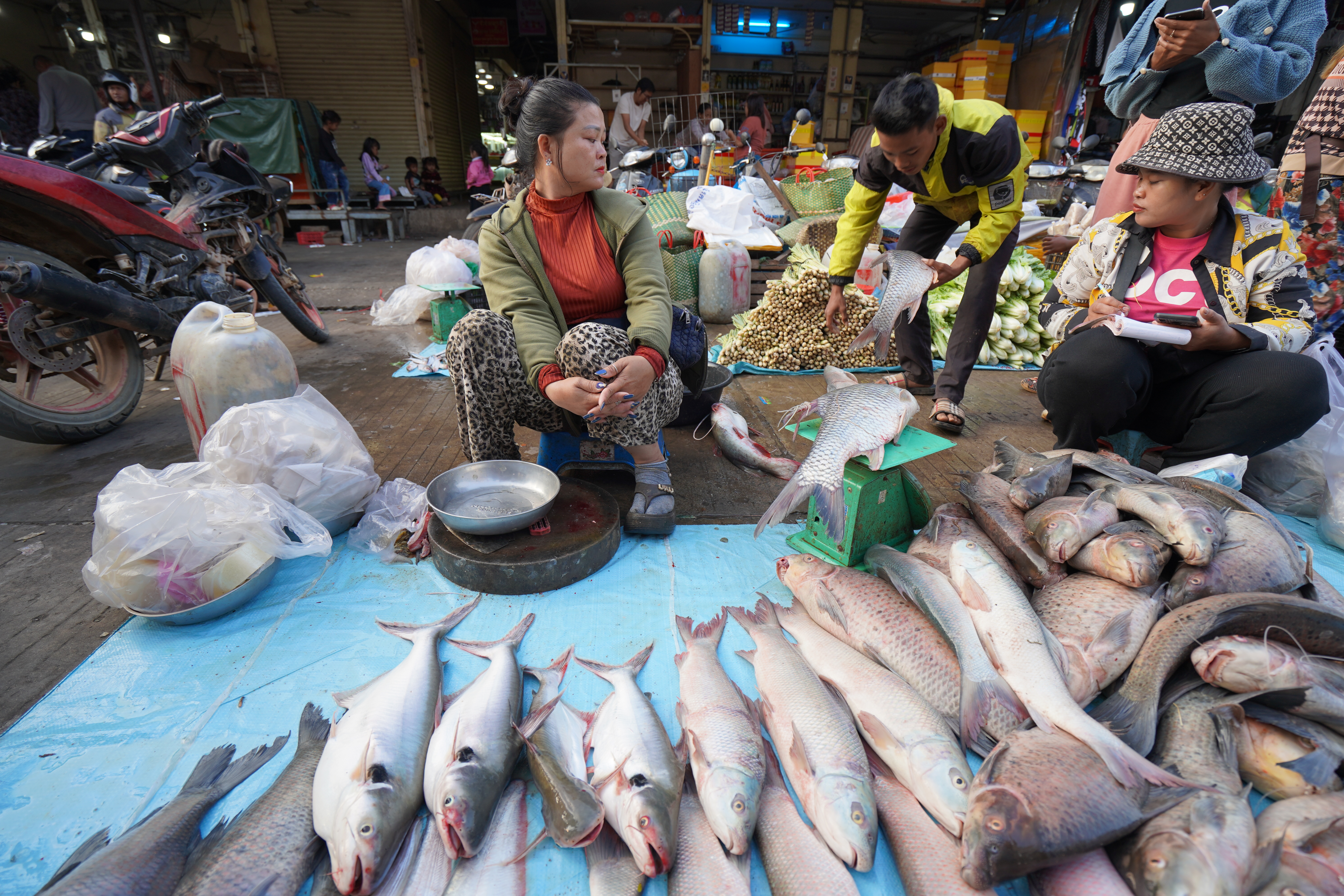
Fish market in Stung Treng, Cambodia — in the upper Mekong, freshwater fish are not just an economic commodity but a nutritional cornerstone for tens of millions of people.
Rivers as More Than Conduits
One of the central arguments of this research is that rivers are consistently misrepresented in ecosystem service frameworks. Too often they are treated simply as channels — conveyors of water, carriers of hydropower — rather than as active generators of value in their own right. Sediment, for example, is frequently framed as an erosion problem, when in reality the natural transport of sediment downstream is what sustains floodplain agriculture, maintains riverbanks, and builds the river deltas on which hundreds of millions of people live. The Mekong Delta — roughly the size of the Netherlands, sitting less than two meters above sea level — depends on a continuous supply of upstream sediment. Dams have already slashed that supply from roughly 160 million tons a year to under 50 million. Without sediment, much of the delta could be lost to rising seas within decades.
Flood pulse connectivity is another undervalued service. The seasonal rise and fall of a river is not a hazard to be controlled — it is the engine of biological productivity. When rivers overtop their banks and spread across floodplains, they deposit nutrients, trigger fish spawning, fill nursery habitats, and recharge groundwater. Dams that regulate flows for hydropower destroy this pulse, with cascading consequences for fisheries, agriculture, and biodiversity that extend hundreds of kilometers downstream. Between 2003 and 2019, fish populations in Cambodia's Tonle Sap Lake — the beating heart of the Mekong system — dropped by nearly 90 percent. That collapse is not only an ecological tragedy; it is an economic one that rarely appears in any dam's cost-benefit analysis.
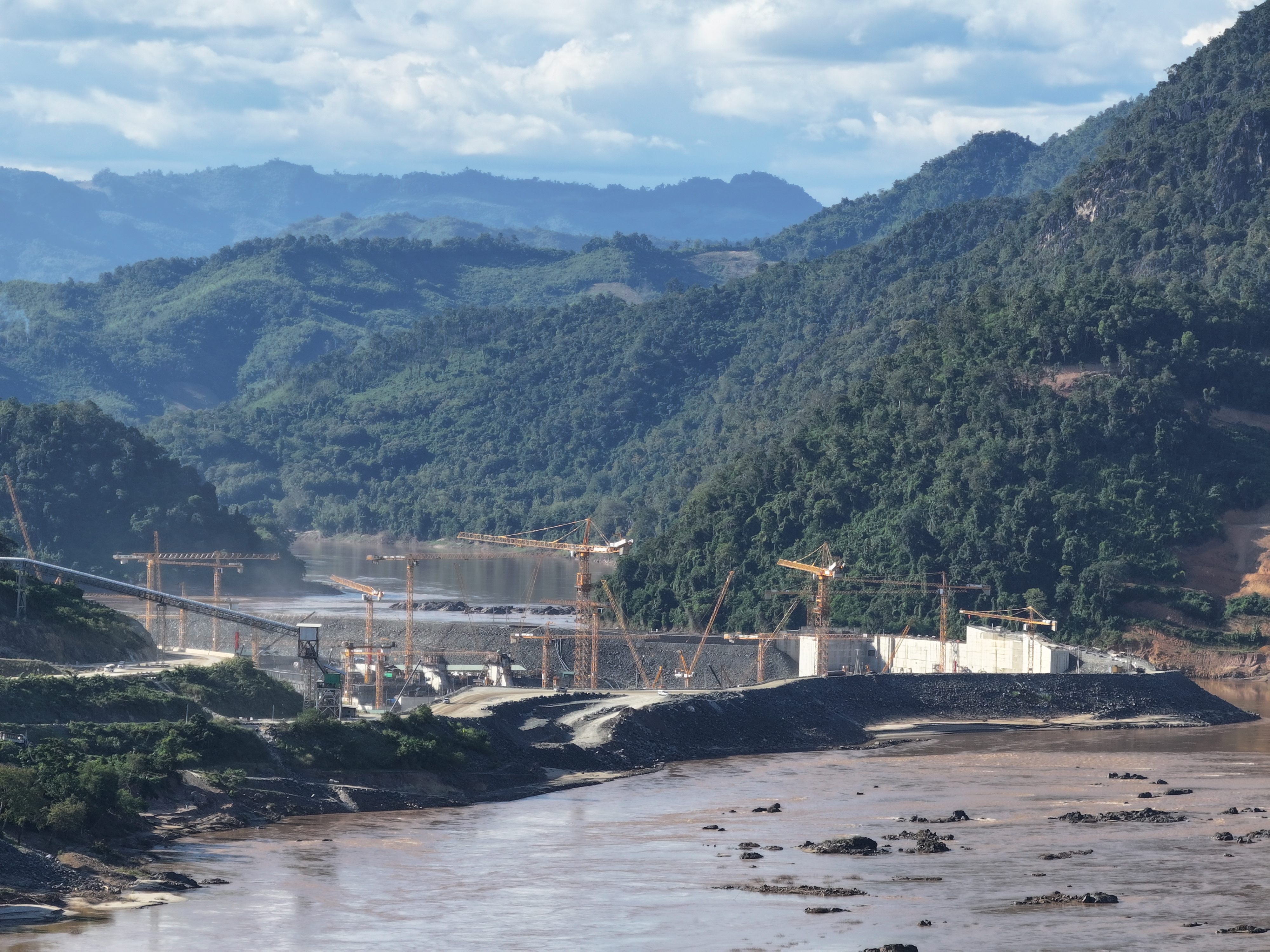
Dam construction on the Mekong in Laos — the river now holds more than 100 large hydropower dams, most built without accounting for the full economic value of what is being lost.
The Valuation Challenge
Valuing rivers is difficult, and the difficulties are not just technical. Much of the Mekong's fishery operates in the informal economy and goes unrecorded in official statistics. Cultural and spiritual values — the meaning of the river to Buddhist communities, Indigenous peoples, and generations of fishing families — resist conversion into dollars. And standard economic tools such as discount rates systematically undervalue future benefits, meaning that long-term ecosystem services look cheap compared to the immediate returns of a dam or sand mine.
Yet the absence of valuation is not neutral. It is a choice that reliably favors extractive industries. When Cambodia used fisheries data to quantify what would be lost, it cancelled two proposed mainstream Mekong dams. When sediment loss to the delta goes unquantified, it disappears from decision-making entirely. As new research from UNR shows, the Mekong is losing value at an accelerating rate — and that loss is measurable, even if it has not yet been measured in the places where it matters most.
What is needed is not a single definitive number but a more honest reckoning with what rivers provide — one that includes fisheries, sediment, flood regulation, biodiversity, and cultural significance alongside the more visible returns of hydropower and sand extraction. Rivers are tightly woven systems. Pull one thread, and others begin to unravel. The goal of this work is to make those connections visible before more of them are lost.